Wood, vinyl or chain link: choosing a fence for wet Skagit ground
In ground that stays soggy half the year, the posts matter as much as the material you pick.
October 26, 2026 · 4 min read
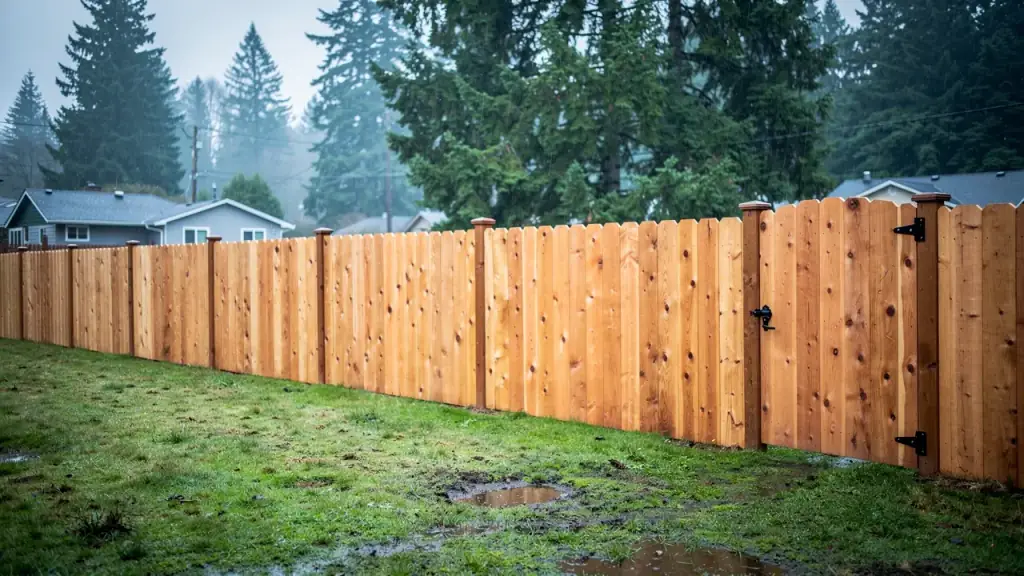
A fence looks like a simple purchase until you try to set one in ground that stays wet half the year. In the Skagit Valley that's common: low fields, soil that holds water, high water tables in winter and long stretches of rain. The material you choose matters, but so does how the posts go in.
Here's how wood, vinyl and chain link behave in these conditions, and what to think about before you ask for an estimate.
Start with the ground, not the fence
Posts fail before panels do. A post sits in wet soil, takes up moisture, and rots at or just below the surface, where air and water meet. Whatever you pick, ask how the posts will be set, how deep, and how water will drain away from them.
Walk the line where the fence would go after a few days of rain. Mark where water pools, where the ground feels soft, and where there's a slope. Fence lines that cross low spots or run along a ditch need extra thought. Tell the handyman about these when you describe the job, because they change how the posts get set.
Wood: warm, adaptable, needs upkeep
Wood is the familiar choice. It looks natural, it can be built to nearly any height or style, and it's easy to repair one board at a time. In a wet climate it also needs care. Untreated wood soaks up water and rots, and even treated wood that's been cut or drilled needs its exposed ends sealed. Boards that touch the ground wick moisture, so a gap between the bottom board and the soil helps.
Expect to reseal or restain every few years. Moss and mildew show up on the shaded side first. The good news is that wood's problems are visible and fixable: a rotted board can be swapped. The weak point is the posts, and a post that has rotted at the base is a bigger repair.
Vinyl: low upkeep, less forgiving of weak posts
Vinyl doesn't rot, doesn't need paint, and washes clean with a hose. For a yard under trees where moss grows on everything, that's a real advantage. The tradeoffs: it can crack under impact, it can sag if the posts aren't set solidly, and a damaged section usually means replacing a whole panel rather than patching a board.
Vinyl also looks the same year after year, which some people like and some don't. Ask to see a sample, because color and texture matter more across a long run than they do in a catalog photo.
Chain link: simple, open, durable
Chain link is the least fussy in wet ground. The mesh doesn't rot, water passes straight through it, and it doesn't catch the wind the way a solid panel can. It's a practical choice for pets, boundaries and open lots. It offers no privacy unless you add slats, and some people find it plain. Galvanized metal can eventually rust at cut ends and joints, though that usually takes years.
Questions to settle before the estimate
Property lines and local rules are worth checking before any work begins. Height and material can be limited by city rules or neighborhood agreements, and a fence built on the wrong side of a line is a headache nobody wants. Ask the handyman what to look into, and confirm your line before posts go in.
- Do you need privacy, or just a boundary or a pet fence?
- How much upkeep are you willing to do every few years?
- Is the fence line wet, sloped or shaded?
- Do you share the line with a neighbor, and have you talked it over?
- Does the city or a neighborhood group set rules on height or material?
Repair or replace?
Not every fence needs replacing. If the posts are solid and only boards or panels are damaged, a repair makes sense. Push on each post. If it moves in the ground, or the base is soft when you press a screwdriver into it, plan for new posts. Fixing panels onto bad posts means doing the work twice.
After a windy winter, look for leaning sections, loose rails and gates that drag. A gate that drags often means a post has shifted, and it's better to catch that before the whole run starts to lean.
What to tell the handyman
Give the length of the run, the height you want, the material you're leaning toward, and where the ground is wet. Say whether there's an existing fence to take out. Photos of the line, taken from each end, help a great deal. Materials can be supplied for you, or you can provide your own, and the estimate comes before work starts.
If you're weighing a repair against a new fence, call 360-813-6743 or send a request with a few photos of the line.
The Mount Vernon Handyman, 360-813-6743
Call 360-813-6743More articles
Reading your deck after a Skagit winter
Twenty minutes, a dry afternoon and a screwdriver will tell you most of what your deck needs this spring.
How to write one handyman list that gets a real estimate
A single well-written request lets one visit cover a dozen small jobs and gives you one estimate you can actually compare.