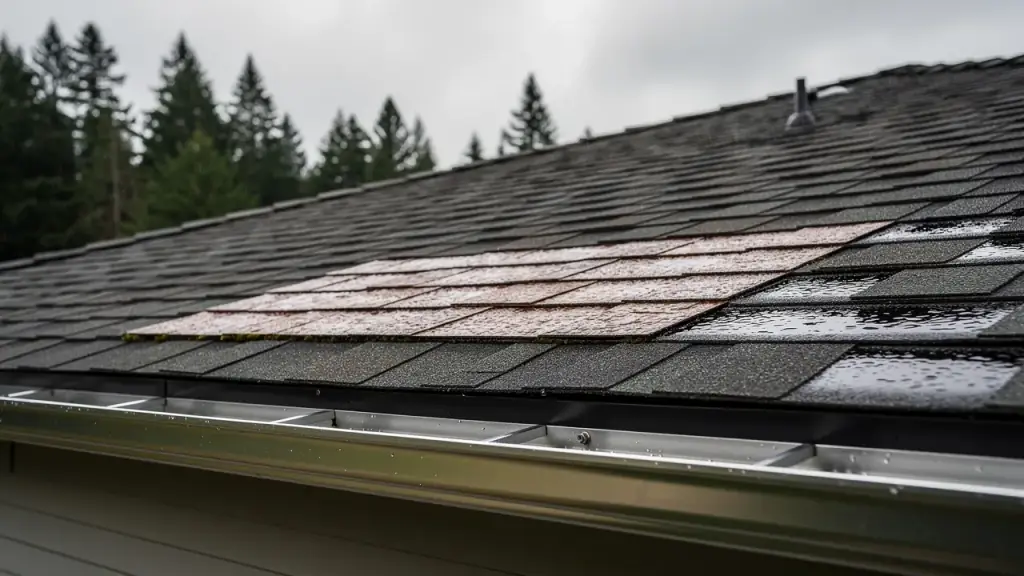
Moss, lifted tabs and flashing that lets go
A roof in the Skagit Valley stays wet for most of the year, and moss is usually the first thing to show. It grows in the shaded seams, lifts the edges of the shingles and holds water where it should run off. A tab missing after a windy night is the other common start, and it is easy to miss from the yard.
The leaks that fool people sit at the details: flashing around a chimney, the collar on a vent pipe, the valley where two slopes meet. Water that gets in there often travels along a rafter before it drips, so the stain on the ceiling can be a long way from the real opening. Gutters that spill over the fascia belong on the same list.
Where the stain shows and what to photograph
When you send a request, say where the stain or drip shows inside the house: which room, which wall, and whether it only appears in heavy rain. That tells the handyman where to start looking before a ladder goes up. Photos help too, such as the stain itself, the roof from the ground, the gutter line, anything hanging loose.
The handyman who comes out looks at the roof, checks the spots where water usually gets in, and gives you an estimate before any work starts. If you would rather talk it through first, call 360-813-6743 or send a request from the contact page and describe what you are seeing.
When a patch is not the honest answer
A few new shingles or a resealed vent collar settle a lot of leaks, but not all of them. If the shingles are brittle across a whole slope, if moss has worked under the surface for years, or if the decking underneath feels soft, a patch only buys one more wet season. It is better to hear that at the estimate than after the next storm.
In that case a larger roof job may be the honest answer, and you decide with the facts in front of you. Whatever the size of the work, keep gutters clear and moss off the shaded slopes through the rainy months. A little upkeep each fall is what keeps a small repair from becoming a big one.