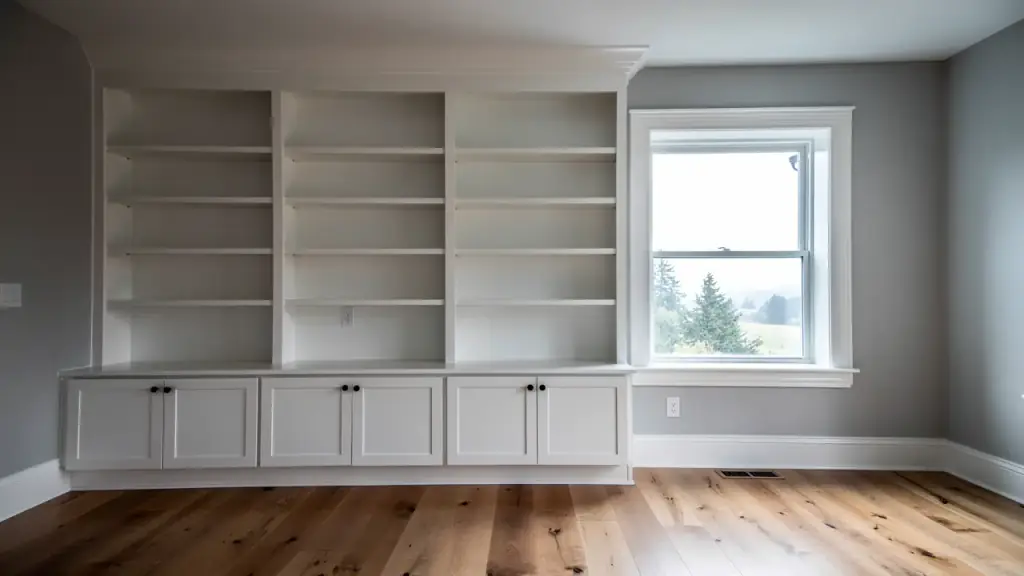
Shelves, trim and the quarter-inch reveal
Carpentry inside the house covers custom shelves, crown molding, cabinetry, trim, and feature walls, plus the staircase that needs a new tread or a rebuilt rail. It is the work where the line between a good job and an obvious one is a quarter inch of reveal along a wall that was never quite square.
Outside, carpentry means decks and patios built for Pacific Northwest weather, where every cut end and every fastener is a place for Skagit rain to get in. The same eye for small gaps carries across both, whether the project is a built-in beside a fireplace or a patio cover off the back door.
Measuring the real wall
It starts with a conversation about what you want: the ideas, the preferences, the budget, and the real measurements of the wall or opening. A rough sketch on paper, a few photos of the room and the dimensions you already have are plenty to send in with your request, and the details get settled in person.
Walls in older Mount Vernon houses are rarely plumb, and floors rarely level, so measurements get taken at the actual spot, not from a plan. The estimate follows, and you hear it before any lumber is cut. Call 360-813-6743 or send a request to begin.
Paint-grade, stain-grade and damp wood
Decide early whether the piece is paint-grade or stain-grade. Paint-grade work can use finger-jointed stock and filled seams, since the paint hides them. Stain-grade means solid boards matched for grain, which changes the material, the time and the way the estimate reads. Say which one you want in your request.
Wood moves in a damp climate. Trim and shelving stock should sit in the house for a few days to acclimate before it is cut and fastened. After the first wet season, check the joints and caulk lines for hairline gaps and have them touched up.