A dripping faucet, a running toilet, low water pressure
Each of these has a usual suspect, and describing it well makes the estimate more accurate.
October 26, 2026 · 4 min read
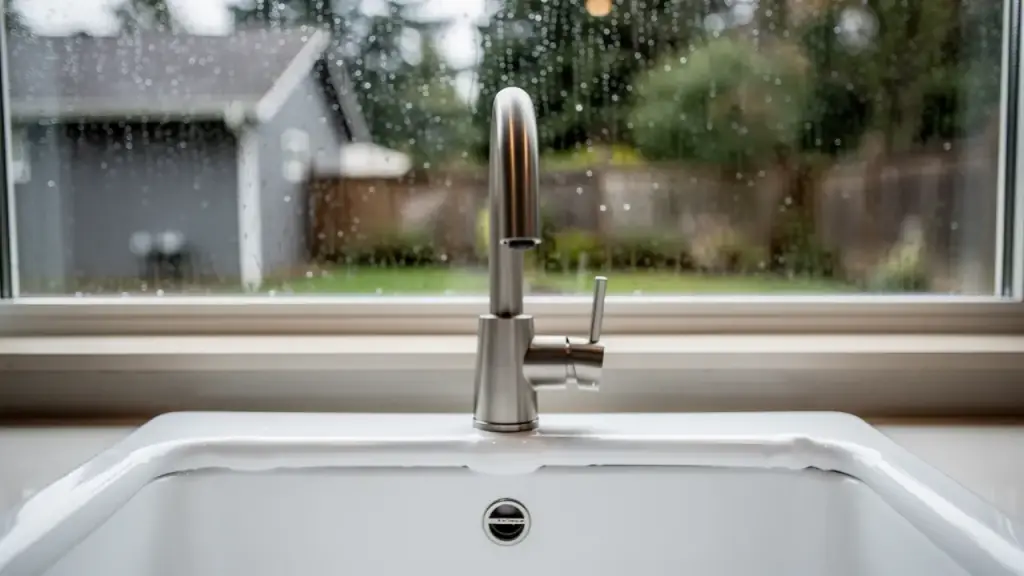
Plumbing problems tend to announce themselves in small ways. A drip you can hear at night, a toilet that refills by itself, a shower that used to blast and now dribbles. Each of these usually points to a specific part, and knowing which one helps you describe the problem so the estimate is accurate.
None of this requires taking anything apart. It's about noticing what's happening, plus a few checks you can do in minutes.
The dripping faucet
A faucet that drips from the spout when it's off is usually a worn internal part. In older faucets with separate hot and cold handles, it's often a rubber washer that has hardened. In single-handle faucets, it's usually a cartridge or a seal. Either way, the drip is water slipping past something that no longer seals.
A drip is small, but it adds up, and it often stains the sink. Notice where the water comes from. A drip at the spout points to the internal seat or cartridge. Water pooling around the base of the handle or at the base of the faucet points to a worn seal or a loose connection. Water under the sink, on the supply lines, is a different problem and deserves attention sooner.
Tell the handyman the brand if you can see it, whether the faucet has one handle or two, and whether the drip is on the hot side, the cold side or both. A photo of the faucet and the area underneath saves a trip.
The running toilet
A toilet that runs, or refills every few minutes, is almost always leaking from the tank into the bowl. The usual suspect is the flapper, the rubber seal at the bottom of the tank that lifts when you flush and drops back to close. Flappers wear, warp and collect mineral film. A poor seal lets water trickle into the bowl, so the tank keeps topping up.
Here's a simple test. Put a few drops of food coloring in the tank and don't flush. If color shows up in the bowl within fifteen minutes, the flapper isn't sealing. Other causes include a fill valve that doesn't shut off, a float set so high that water spills down the overflow tube, and a chain that's too short or tangled.
A running toilet wastes water all month long, and you'll usually see it on the bill. Say how it behaves: runs constantly, refills every so often, or hisses after the flush. Those three descriptions point to three different parts.
Low water pressure
Low pressure is the one that needs the most questions. The first is whether it's everywhere or in one place. If a single faucet or shower is weak, the cause is usually local: a clogged aerator or showerhead, where mineral buildup blocks the tiny holes. You can often unscrew an aerator and find grit in it.
If the whole house is weak, the cause is farther upstream. It could be a shutoff valve that's partly closed, a pressure regulator that's failing, a leak somewhere, or old supply pipes that have narrowed inside. Also check whether only the hot water is weak. That points toward the water heater or its connections, not the main supply.
- One faucet or showerhead weak: look at the aerator or showerhead first.
- Hot weak, cold normal: the problem is on the hot side, often near the water heater.
- Whole house weak: check that the main shutoff is fully open, and tell the handyman either way.
- Pressure dropped suddenly: look for wet spots, and check whether the water meter moves when everything is off.
Know what needs a specialist
A handyman can take on many plumbing repairs and installs, such as leaks, slow drains, and new faucets and toilets. Some jobs, like water heater work or anything involving the main line or a sewer line, may need a plumber with the right credentials. You should hear which category your job falls into at the estimate. If it's the second kind, ask who is doing the work and what's included.
If water is spraying, a pipe has burst, or water is coming through a ceiling, shut the water off at the main valve first, then call. Emergency repairs are prioritized.
What to tell them
A good description saves time. Say which fixture it is, what it does, and since when. Is the sound or the leak constant, or only after use? Is it hot water, cold, or both? Has anything changed recently, like new work in the house, a cold snap, or a jump in the water bill?
Take a photo of whatever you can see, including under the sink. Mention if you're supplying a replacement part or fixture, or want one brought for you. The estimate comes before any work starts, with the pricing laid out plainly.
If you've got a drip, a runner or a weak shower, call 360-813-6743 or send a request and describe what's happening.
The Mount Vernon Handyman, 360-813-6743
Call 360-813-6743More articles
Reading your deck after a Skagit winter
Twenty minutes, a dry afternoon and a screwdriver will tell you most of what your deck needs this spring.
How to write one handyman list that gets a real estimate
A single well-written request lets one visit cover a dozen small jobs and gives you one estimate you can actually compare.